



Truck Preventive Maintenance Checklist and Schedule for Fleets

Avoid expensive breakdowns and downtime with a preventative truck maintenance program specifically designed to fit your fleet schedules. When your trucks suddenly break down, deliveries are delayed, and the repair bills begin to multiply, a robust truck preventive maintenance strategy is important to keep fleet operations running smoothly                         .

For growing fleets, maintenance solutions can be the answer to a successful day. A truck preventive maintenance checklist helps you identify problems early so that you can reduce expensive breakdowns and save on fuel. If you own a delivery truck, a dump truck, or a semi-truck, preventive truck maintenance can help keep your customers happy and your trucks on the road.

Table of Contents

Truck Preventive Maintenance Checklist

Truck Preventive Maintenance Checklist

A comprehensive heavy duty truck preventive maintenance checklist helps the driver and commercial fleet manager in keeping track of the systems. A regular inspection process minimizes surprise failures and increases long-term reliability. To avoid small issues from escalating to bigger ones and to keep fleets organized, many fleets are now following a diesel truck preventive maintenance checklist.

Engine and Fuel System Checks

Engine problems are some of the most expensive failures that fleets deal with. At every service, a comprehensive truck preventive maintenance checklist should cover in-depth engine checks.

Injectors:
Fuel injectors can become contaminated or have worn seals, all of which can lead to failure. Testing injectors and fuel pressure are some of the items that should be on your diesel truck’s preventive maintenance checklist.  

Fuel Filters:
Filter changing prevents fuel filters from getting clogged and helps to keep injectors working and ensures better combustion efficiency.

Air Filters:
Air Filters should be checked frequently for fleets travelling long distances on highways, particularly in dusty areas, as limited air flow decreases engine performance and increases fuel consumption.

Smart fleet managers follow heavy duty truck preventive maintenance checklist, which helps them keep track of multiple trucks at the same time.

Cooling System Inspection

One of the common causes of commercial truck breakdowns is cooling system failure. It is important to service them regularly so that they don’t overheat and cause damage to the engine.

Radiator:
Check for leaks, corrosion, and clogged fins. Low airflow rates result in high operating temperatures quickly.

Water Pump:
A worn water pump can cause coolant circulation problems. Keep an eye out for leakages, grinding noises, and overheating.

Coolant Levels:
Low coolant levels can cause the engine to overheat. Coolant checks should be a part of a complete heavy duty truck preventive maintenance checklist as well.

Cooling system maintenance is a primary concern in most dump truck preventive maintenance checklists, since the engines are subjected to heavy-duty use each day.

Electrical System and Battery

Trucks can suddenly stop if there are electrical failures. Regular inspections prevent no-starts and charging problems.

Alternator:
A broken alternator will affect batteries, lighting, and on-board electronics.  

Battery Terminals:
Inspect battery terminals for corrosion frequently and track the voltage, as it will reduce current and result in starting problems if the terminals are corroded.

Wiring:
Loose wiring or damage causes sensor error and electrical shorting. Fleets using telematics and ELD systems depend heavily on reliable electrical performance.

A thorough heavy duty truck preventive maintenance checklist is useful to the technician in minimizing these electrical problems before trucks are stranded.

Brake System Inspection

The first thing on every truck’s preventive maintenance checklist should be a brake inspection. When brakes go out, it is a serious safety hazard and a DOT violation.

Brake Pads:
A worn brake pad reduces the stopping power of a vehicle and wears the rotors or drums.

Air Brake System:
Inspect compressors, air dryers, and tanks for water condensation or leaks.  

Lines and Chambers:
It can impact how the truck brakes and stops due to damaged air lines or brake chamber wear.

To ensure compliance and to reduce liability risks, fleet managers must perform the semi truck preventive maintenance checklist before the truck leaves the yard.

Tires and Suspension

Tires and suspension components wear out rapidly because of harsh braking.

Tire Pressure:
Tires that are under-inflated or over-inflated cause uneven wear and reduce fuel efficiency.

Alignment:
Misaligned tires wear faster and cause steering instability.

Shocks and Springs:
Worn suspension components affect handling and cause driver fatigue.

Suspension inspections are among the important items on a dump truck’s preventive maintenance checklist, since dump trucks frequently travel on uneven surfaces and construction sites.

Fluids and Lubrication

Fluid inspections are essential for protecting driveline components and minimizing internal wear. Dirty oil causes engine wear and affects lubrication.

The fluid sampling and leak checks are a major part of any diesel truck’s preventive maintenance checklist, which is used to identify problems in the truck’s internal systems early on.

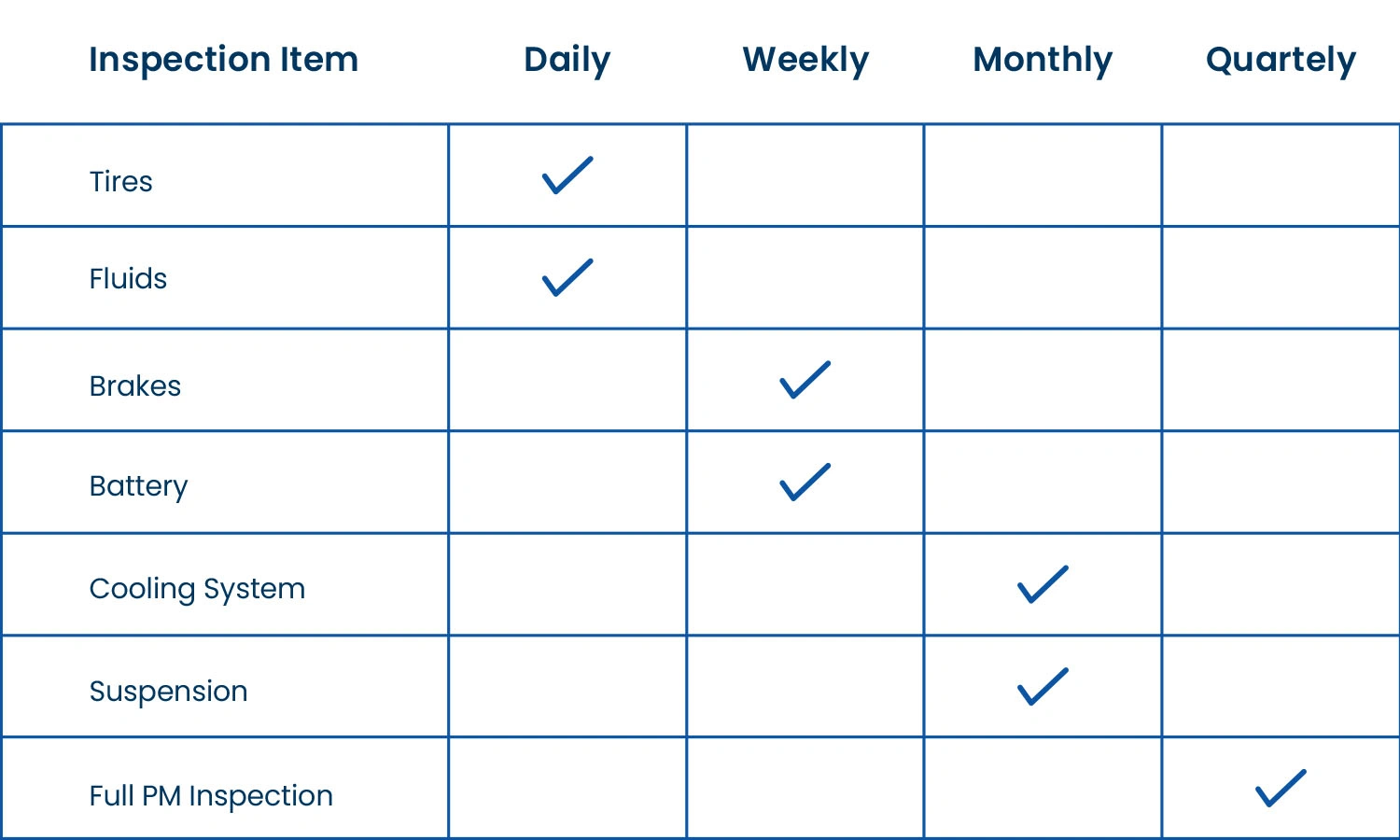
Semi Truck Preventive Maintenance Schedule

Semi Truck Preventive Maintenance Schedule

By following a reliable semi truck preventive maintenance schedule, fleets can prevent problems before they even occur. Fleets are able to perform preventive maintenance by the distance traveled, operational hours of the vehicle, or according to manufacturers’ recommendations, instead of repairing after a breakdown. The semi truck preventive maintenance checklist should be followed by bigger fleets to maintain low levels of downtime.

A truck preventive maintenance schedule includes oil changes, brake inspections, tire rotation, and coolant checks. This maintenance schedule is even more important for fleets that are duly following a heavy duty truck preventive maintenance checklist, as these trucks are stressed more.

Many operators also put together custom schedules based on equipment types. A dump truck preventive maintenance checklist might include a greater number of suspension checks or a more in-depth inspection of electrical systems or cooling components.

Common Truck Components That Fail Without Preventive Maintenance

Common Truck Components That Fail Without Preventive Maintenance

Skipping regular maintenance often leads to expensive component failures. A proper truck preventive maintenance plan helps reduce these risks before they impact deliveries and customer relationships.

Fuel Injectors and Fuel System

Dirty fuel systems reduce performance and damage injectors over time. Many fleets follow a diesel truck preventive maintenance checklist that involves changing filters before they cause costly damage to the fuel system.

Turbochargers and Air Intake

Airflow restrictions, oil contamination, and overheating can all shorten turbo life.

EGR Valves and Emissions Systems

Modern emissions systems require routine cleaning and inspections. Carbon buildup inside EGR valves creates power loss, warning lights, and poor fuel efficiency.

Cooling System Failures

Overheating destroys engines quickly. A proper preventive truck maintenance service always includes radiator inspections, coolant testing, and hose inspections.

Brake System Wear

Ignoring brake wear increases stopping distances and creates DOT compliance problems. Many fleets include brake tracking inside their semi truck preventive maintenance records.

Fleet maintenance services help enhance fleet reliability and minimize expensive downtime across many vehicles for larger operations that require full support.

Top Advantages of a Truck Preventive Maintenance Program

Top Advantages of a Truck Preventive Maintenance Program

A robust truck preventive maintenance program can help fleets save on operating costs and increase reliability. Managers can prevent emergency repairs by scheduling maintenance work around time periods that will minimize downtime and increase efficiency.

Increased uptime is one big advantage of truck fleet preventive maintenance. The days that trucks sit in repair bays are simply wasted. Drivers also have a sense of security knowing that the equipment they use is reliable. It provides enhanced customer service and helps to maintain the dispatch timings.

A further advantage of a preventive truck maintenance program is that the long-term costs of repairs are lowered. Early detection of coolant leaks, worn brakes, or weak batteries means preventing catastrophic issues later. Truck fleet preventive maintenance systems are now more commonly utilized to track inspection and service periods, and repairs.

Mobile Truck Preventive Maintenance Services

Mobile Truck Preventive Maintenance Services

Many fleets no longer have time to pull trucks into shops for every inspection. Hence, mobile truck preventive maintenance services are becoming popular throughout the trucking business. It allows technicians to service and maintain trucks anywhere they are parked.

Fleets can streamline inspections with flexible maintenance support from CS Truck & Trailer, which specializes in real-world maintenance solutions. Mobile truck preventive maintenance is paired with the standard fleet preventive maintenance program to minimize interruptions and maintain regular truck operations.

Mobile truck preventive maintenance also offers faster inspections for trailers, brakes, tires, and fluids for fleets.

CS Truck & Trailer offers Fleet Maintenance Services

The skills of knowledgeable technicians can make a lot of difference when it comes to reducing downtime and scheduling repairs in advance. From complete truck preventive maintenance to emergency roadside repairs, CS Truck & Trailer experts ensure trucks are always on the move.

With a proper fleet maintenance schedule strategy, fleet operators can organize service intervals more effectively.

Trailer inspections also play a huge role in uptime. The detailed trailer maintenance checklist helps fleets avoid tire, lighting, and compliance problems.

Frequently Asked Questions

Truck preventive maintenance is a planned inspection and maintenance service in order to reduce downtime, enhance reliability, and extend the useful life of commercial trucks. 

A truck preventive maintenance checklist includes engine inspections, brake checks, fluid inspections, tire evaluations, cooling system checks, and electrical system testing.

Most fleets follow a semi truck preventive maintenance schedule based on mileage, engine hours, or operating conditions. Regular monthly service checks and daily truck and trailer inspections are common.

Preventive maintenance truck program reduces downtime, repair costs, increases safety, and protects fleets from major component failure.

Common parts that fail when maintenance is not performed include fuel injectors, turbochargers, brakes, cooling systems, alternators, and suspension parts.

Yes. Mobile truck preventive maintenance services reduce downtime by bringing maintenance directly to fleet yards, terminals, or job sites.

Conclusion

Conclusion

Downtime is a costly issue in the trucking industry. A cost-effective truck preventive maintenance program for your fleet will help keep your fleet more productive, reliable, and prevent costly downtime before it occurs. Adopting a truck preventive maintenance checklist or getting professional assistance from CS Truck & Trailer can help fleets to fulfill their commitments, keep drivers safe, and maximize uptime all year round.

Recent Posts

Author

Megan McTaggart - Fleet Industry Copywriter

Margaret Johnson

Fleet Industry Copywriter – CSTT
Margaret Johnson is a professional content writer specializing in fleet management, vehicle maintenance, and repair industry insights. I create well-researched, practical, and SEO-driven content that helps fleet managers and business owners make informed decisions. With a focus on clarity and value, Margaret translates complex technical topics into easy-to-understand, actionable information.